Mobile district

Broke Rave Bus

The party moves, on wheels.

Don’t need an Uber. Get on the bus and party.

Music, games, people, Miami and beyond. A double-decker where the ride is the event, not the transport to it. The city should be able to leave the city.

Concept vehicle · not built
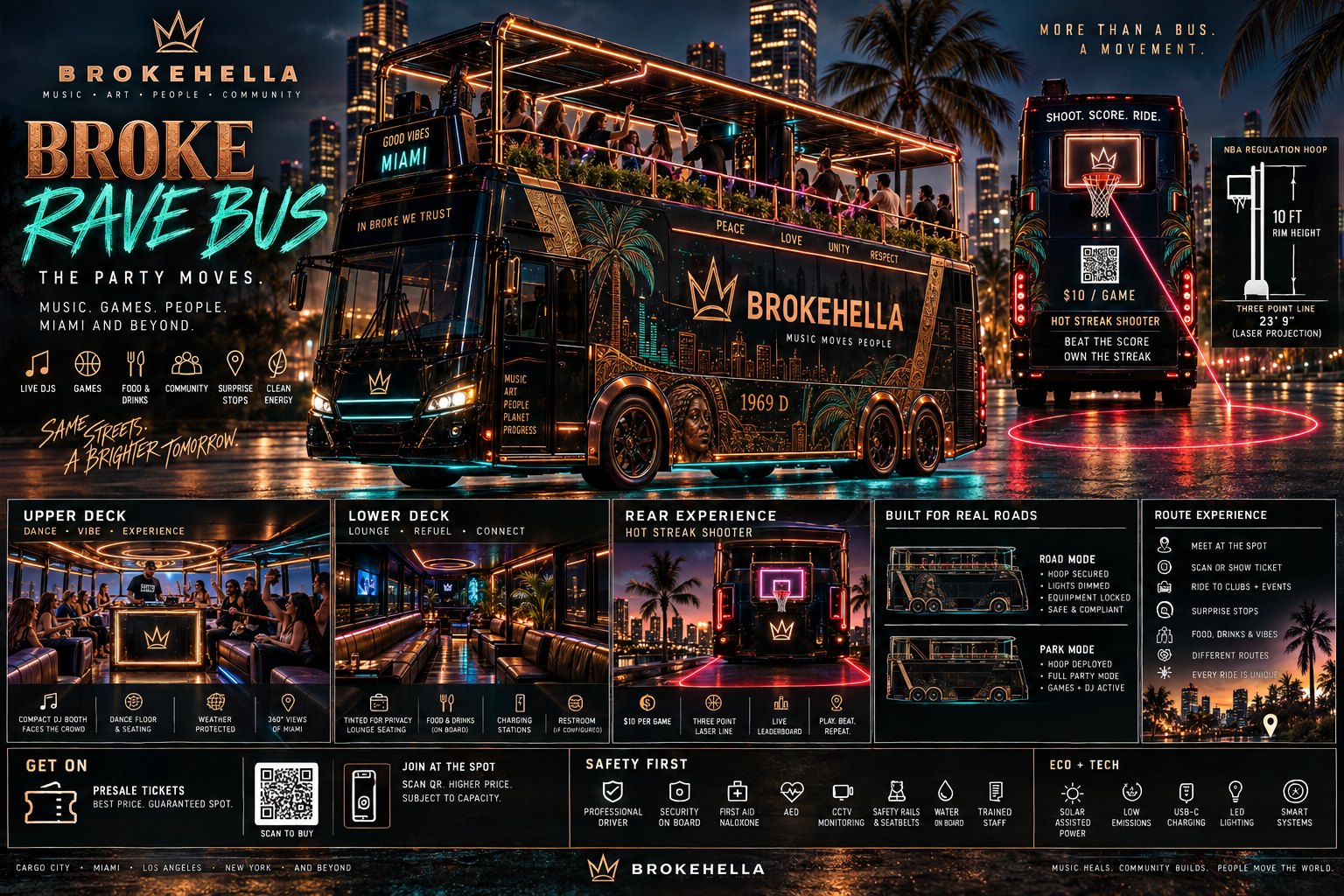
Concept board for the Broke Rave Bus: a black and copper double-decker with an open upper deck of dancers, a lit lower deck, and a rear view showing a basketball hoop with a projected three-point arc. Panels below show the upper deck DJ booth, the tinted lower lounge, the rear Hot Streak Shooter, road and park modes, and the route experience.

Concept art. Livery, layout and fittings are a design direction, not a specification. The final exterior is meant to be an artist-voted livery rather than a fixed corporate wrap.

The ride

Meet, board, ride, arrive.

The destination is part of the night, not a detail on a ticket. A route can change. A stop can be a surprise. What does not change is that you know where to meet and when the wheels turn.

  1. Meet at the spot. A published meet point and a departure time.
  2. Scan or show your ticket. Presale is checked at the door; walk-ups depend on room.
  3. Ride. Upstairs is the deck. Downstairs is the lounge. Both are the venue.
  4. Arrive, or keep going. Think of a yacht pulling into a dock. The Bus pulls up and parks. If there is a block party already going, we watch it from the deck, or go down and join it as guests; it is their party. If there is not, we move on to the next stop.
Built for real roads

Three modes.
The wheels decide the first two.

A venue that drives is only a good idea if it stops being a venue while it is driving. Everything that makes the bus fun is on a switch, and the switch is tied to whether the vehicle is moving. Parked, there is one more switch, and it is the one that turns a bus into a stage.

Road mode

Safe to move.

  • Basketball system secured, hoop stowed
  • Three-point projection off
  • Loose equipment locked down
  • DJ gear secured in its mounts
  • Passengers in required travel positions
  • Exterior lighting in road configuration
Park mode

The city opens.

  • Hoop deployed, playing area set
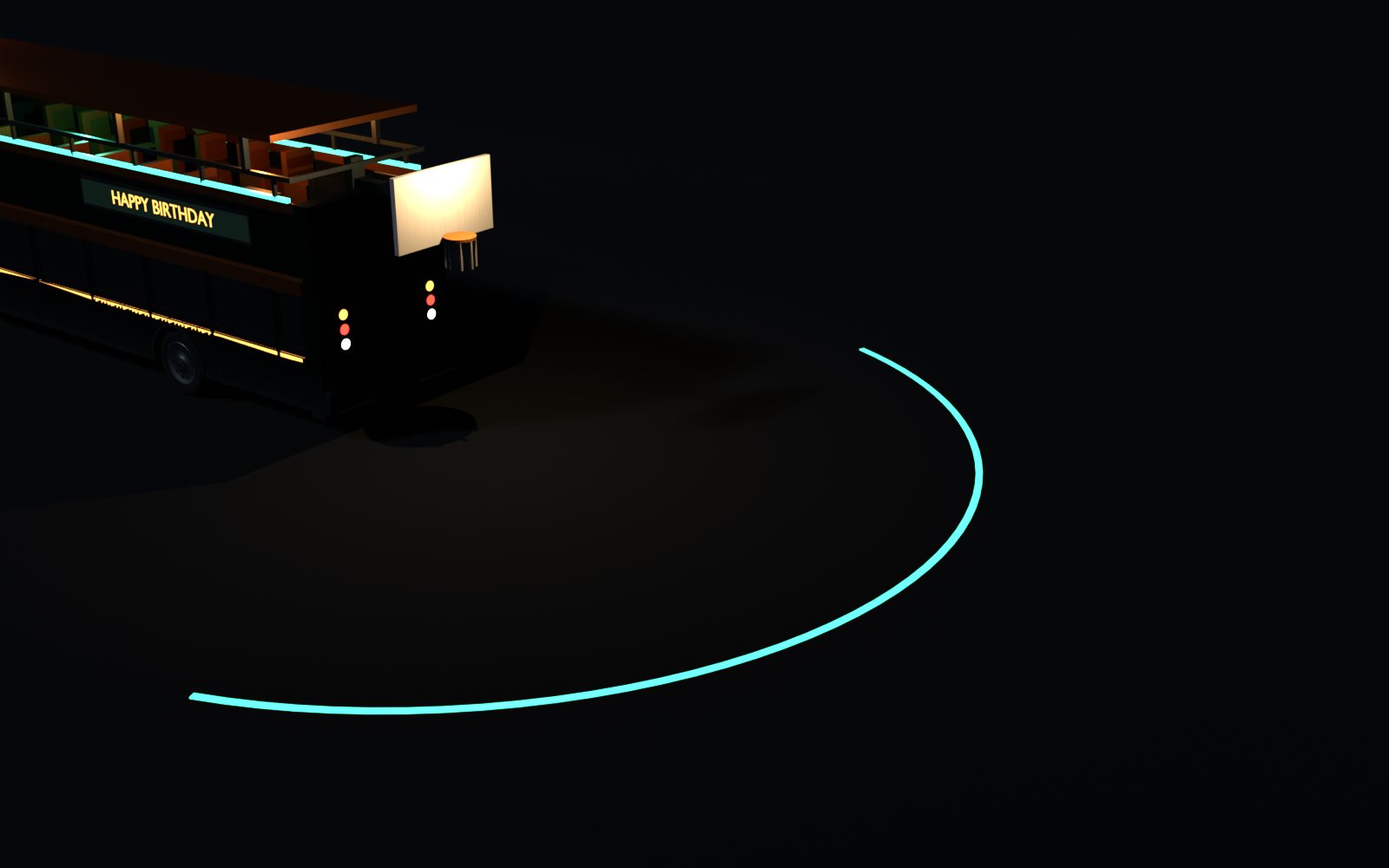
  • Three-point arc projected on the ground
  • DJ active, deck open
  • Leaderboard live
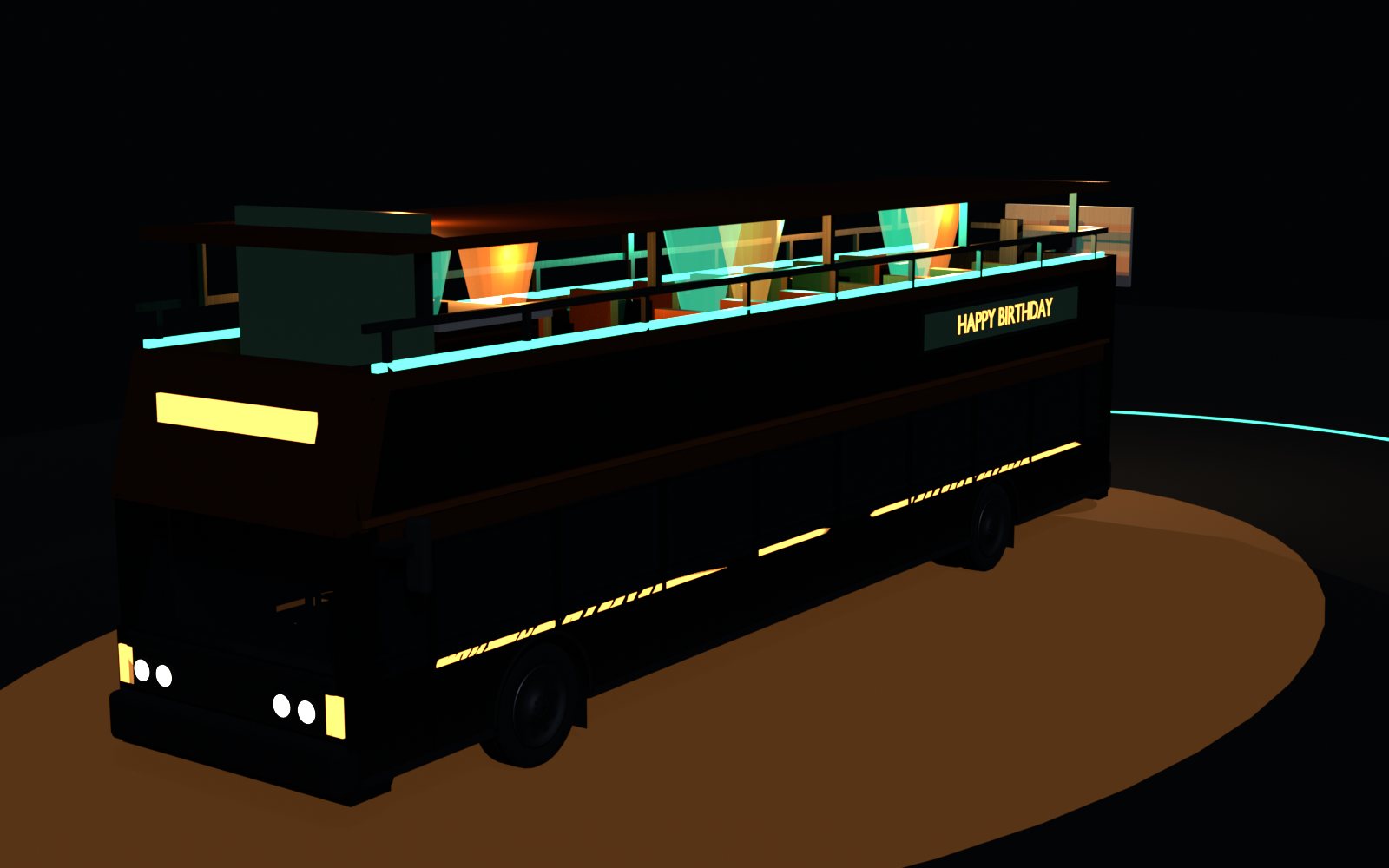
  • Full party lighting
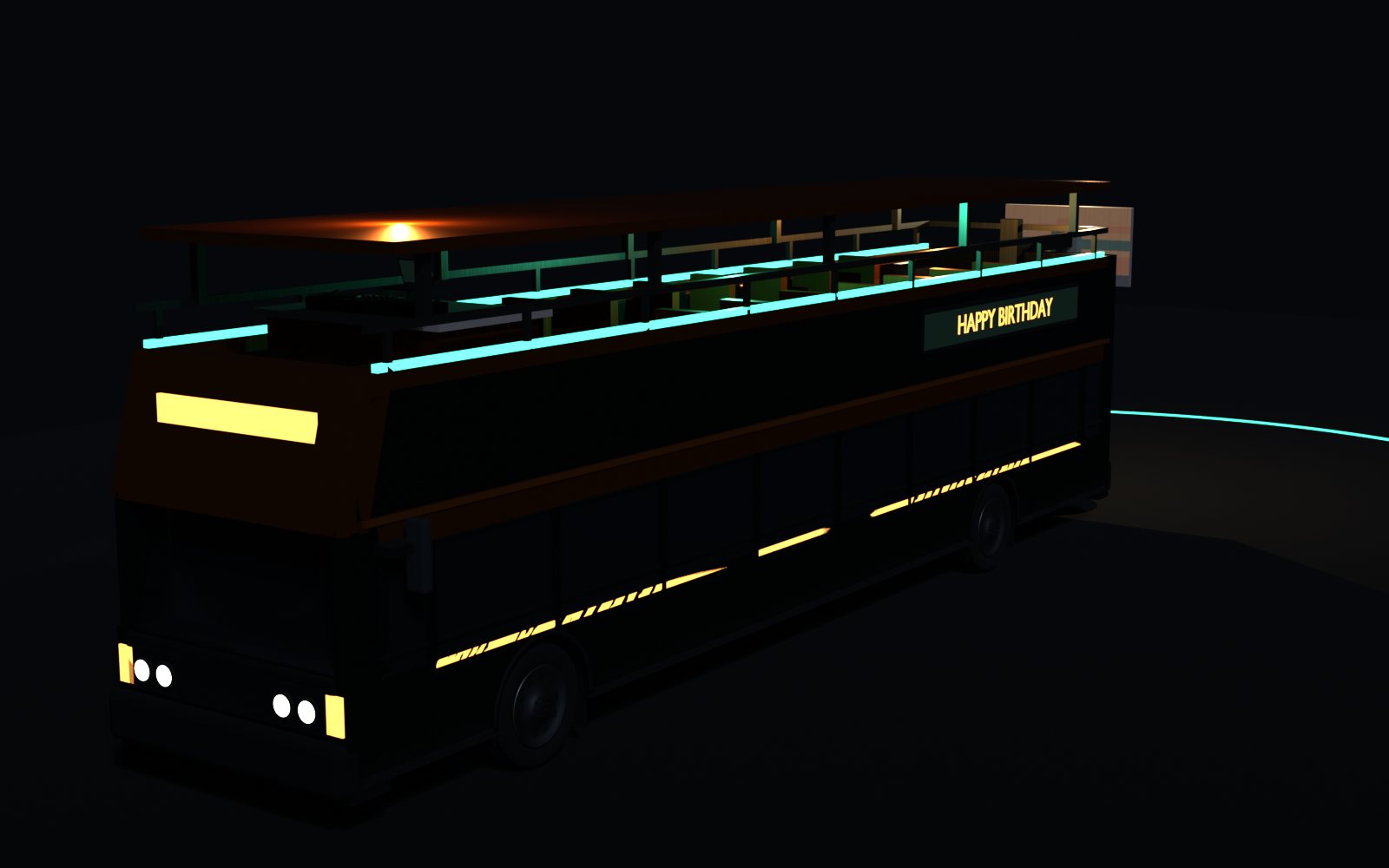
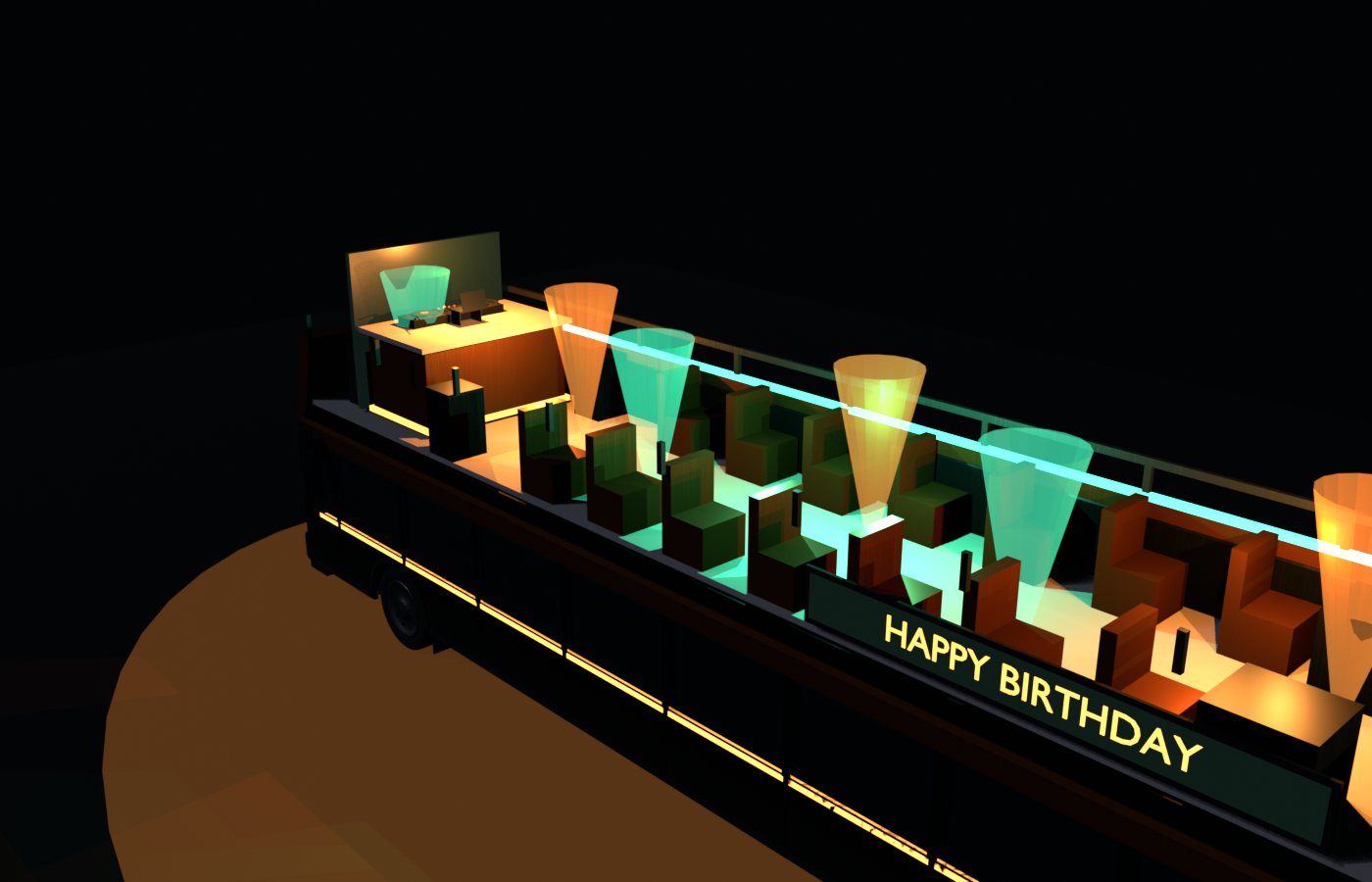
  • LED birthday board lit on both sides
  • Games and interactions unlocked
Performance mode

It stops being a bus.

  • Show rig deployed off the canopy
  • Beams onto the deck, wash on the ground around it
  • A surface behind the booth to throw visuals on
  • Park mode underneath it, hoop and all
  • Lighting follows what is actually playing
  • Only ever parked, never moving

Which behaviours are permitted while a vehicle is in motion is decided by vehicle regulation and the eventual build, not by us. The mode split is how the concept is designed to respect that: road mode is the only one with the wheels turning, and the other two are things that happen after the handbrake is on.

Upper deck

Dance. Vibe. Experience.

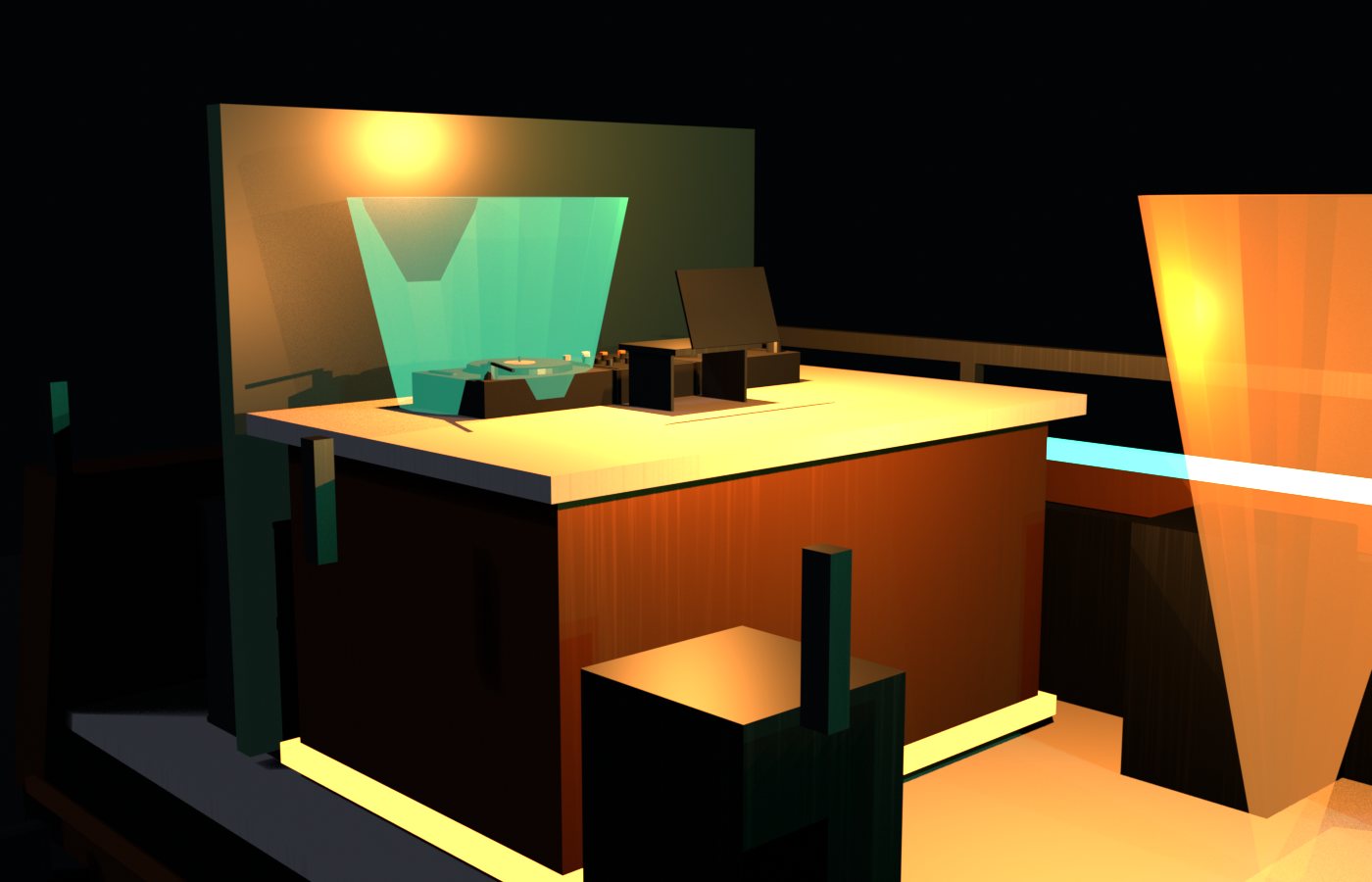
A compact DJ booth facing the passengers rather than the road, with the floor wrapped around it and seating down both sides. Open air, weather protection overhead, and a rail you cannot lean past.

BoothCompact, faces the crowd
FloorAround the booth, seating both sides
EdgesGuardrails, controlled access
CapacityCounted and enforced
Lower deck

Lounge. Refuel. Connect.

Tinted for privacy, cooled, and quiet enough to hear someone. Seating, food and drinks, charging, and a restroom where the platform allows one. A bank of lockers across the back wall holds your stuff, so the deck upstairs is for dancing and not for guarding a bag.

SeatingLounge, tinted glass
ServiceFood and drinks on board
PowerCharging stations
RestroomWhere configuration permits
LockersHold your stuff, rear wall

No VIP deck up here and no paid skip past the general floor. A charter takes that rule with it or does not get the bus. Brokehella does run a paid membership tier (the Copper Patron); it is deliberately not a better seat on this deck. The site stopped making a blanket “no VIP” claim on 2026-08-19 and said so on the record.

The model

Look at the thing.

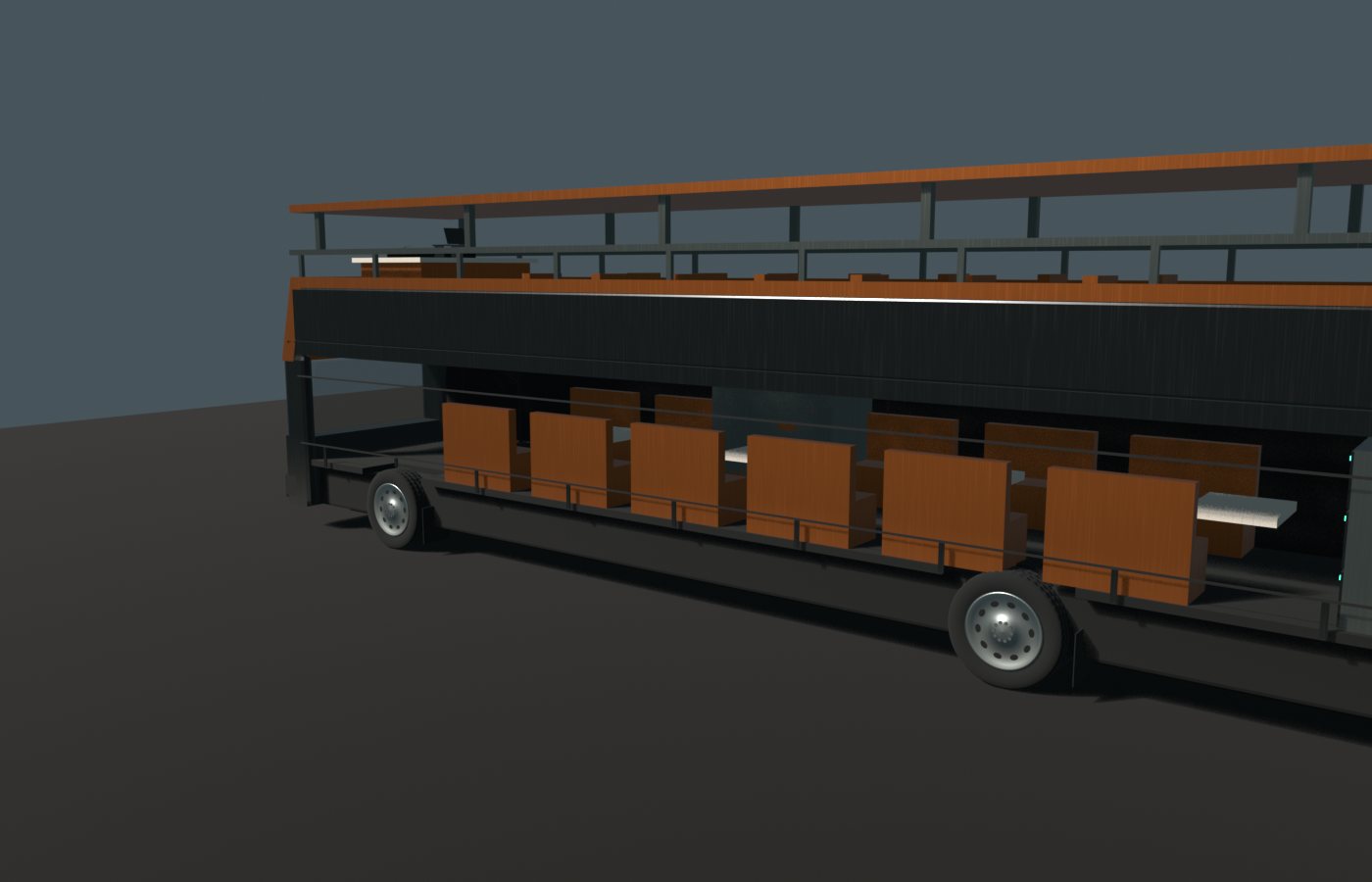
The same bus this page describes, built to metres. It is a drawing of a concept, not a photograph of a vehicle: nothing has been engineered and no chassis has been chosen. Everything the model shows is also written on this page, so a machine that cannot draw it loses nothing but the ability to turn it round.

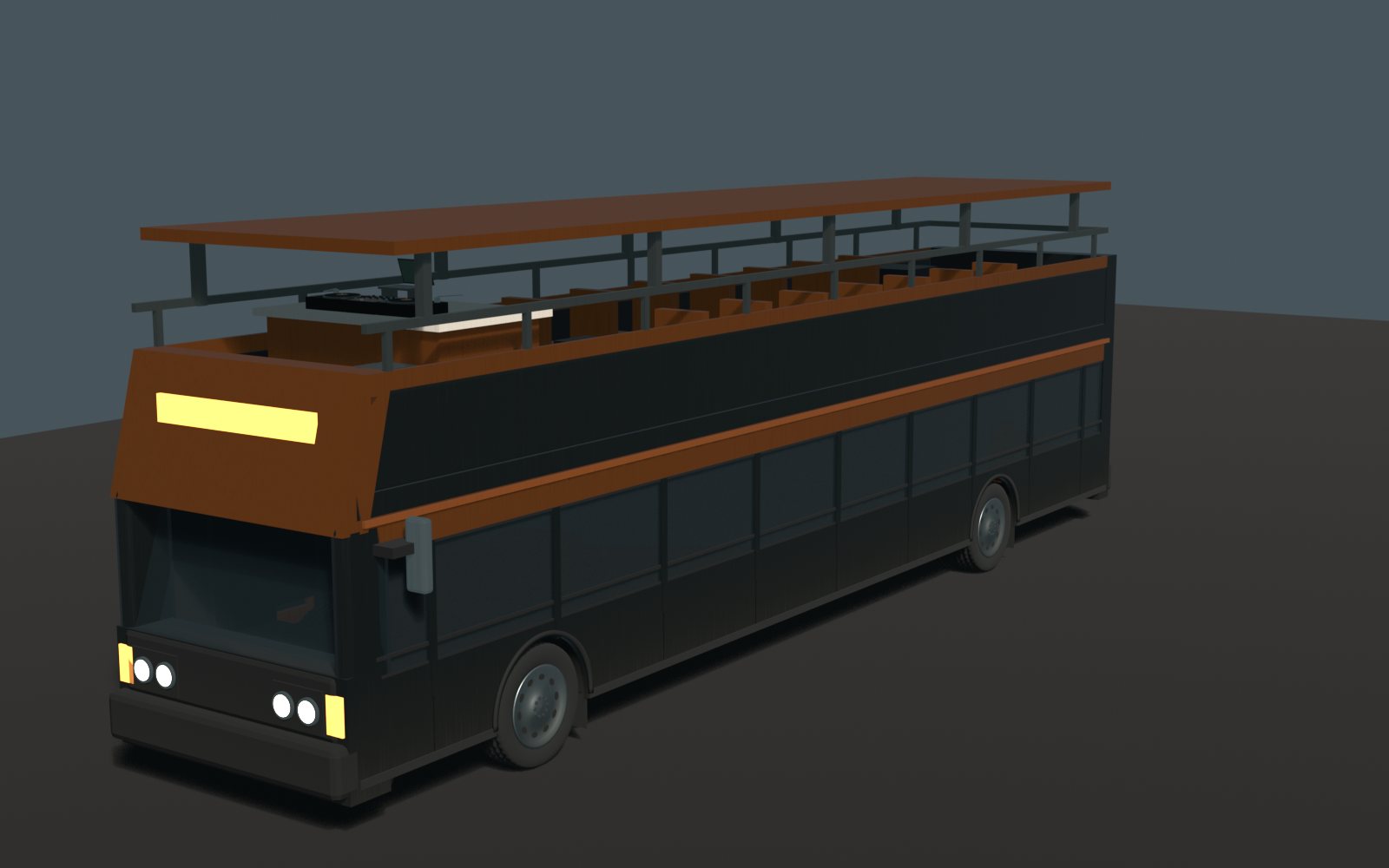
The Broke Rave Bus in road mode, in daylight, seen from the front and left. A black and copper double decker with a copper canopy on steel posts over an open upper deck, a guardrail down both sides, seating and a compact booth on the top deck, tinted glazing along the lower deck, and the light strips dark.
Road mode

The bus

Rear experience

Hot Streak Shooter

A hoop on the back of the bus and a three-point line thrown on the ground by a projector instead of painted or bolted down. Beat the score, own the streak, and stay on the board until somebody takes it.

Entry

$10 per game

Line

Projected three-point arc

Board

Live top streak

Rule

Winner stays until beaten

A regulation hoop is 10 ft at the rim and the NBA three-point line is 23 ft 9 in at the top of the arc. Whether a rear-mounted system on a road vehicle can hold either is an engineering question, not a claim we are making here. Projecting the line rather than fixing it is the part of the idea that survives being parked somewhere new every night.

Get on, one day

How boarding would work, if the bus is built.

Future concept. There is no bus, no ride, no ticket and no way to pay for one today. This is the plan for how getting on would work.

Presale

The cheaper way, with a seat held.

The plan: booking ahead would hold your seat, and it would always cost less than walking up.

At the spot

Walk up, if there is room.

The plan: walking up would cost more, and you would board only if there is room. Capacity is a safety number, so it would not move for money.

No prices are published yet because no ride has been priced. When one is, the number and what it covers go on The Receipts like everything else.

Safety

We party hard.
We plan harder.

Safety is not the boring paragraph at the bottom of the page. On a moving venue it is the design.

On board
  • Professional commercial driver
  • Marked, enforced capacity
  • Seatbelts and travel positions
  • Upper-deck guardrails
  • Secured equipment storage
Equipment
  • First aid kit
  • AED
  • Naloxone
  • Fire extinguishers
  • Marked emergency exits
  • Free water, always
Protocol
  • Trained staff on every ride
  • Security and camera monitoring
  • Emergency communication
  • Incident reporting
  • Weather shutdown procedure
On medical emergencies

We cannot know what someone consumed before boarding. We can control how we respond once they are with us.

Staff are trained to recognise an emergency and to activate emergency medical response. The bus is not a medical facility and staff are not there to treat anyone. Carrying naloxone and an AED means the equipment is on hand while 911 is on the way. Emergency services remain the escalation path, every time.

The passport Concept · not built

A reason to take the second ride.

The idea: the same QR that gets you on keeps a record of where you have been. Routes ridden, sets caught, streaks set, drops picked up. Ten routes and you are in the 10 Ride Club.

None of this is built. No account, no points, no badges, nothing to sign up for. It is written down here so that if it does get built, it gets built in public. And so it never quietly becomes a loyalty scheme that charges people for being loyal.

Status

Concept vehicle. Not currently offered for sale or operation.

Final vehicle configuration and compliance are subject to professional engineering, vehicle certification, accessibility requirements and applicable local, state and federal rules. Nothing on this page is a schedule, a booking, a price, or a claim that any of it has been approved by anyone.

Questions.

Can I book it?

No. Not currently booking. There is no vehicle yet: nothing has been engineered and no chassis has been selected. When that changes this page will say so with a date on it.

How many people fit?

We do not publish a number, because we do not have one. Capacity is a safety figure that comes out of an actual build and an actual inspection, and inventing it to fill a table would be the kind of claim this project exists not to make.

Is the basketball hoop real?

It is in the design and in the model: stowed while moving, deployed when parked, with the three point line projected on the ground rather than painted. Whether it survives an engineer is a question for the engineer.

Does the DJ booth face the crowd?

It faces back along the upper deck, so the person playing is looking at the people rather than at a wall. That is the whole reason it is up there.

Can the Bus say happy birthday?

Yes, in the design: an LED board on each side of the upper deck, lit when the Bus is parked and dark while it moves, the same rule as the party lights. A name only goes up if the person it belongs to wants it there. There is no booking or price for it, because there is no Bus yet.

Where do I put my stuff?

In a locker. The design has a bank of them across the back wall of the lower lounge, each with a light that shows whether it is taken. How many there are is the drawing, not a figure to plan around.

What is performance mode?

Park mode with the show rig out: beams off the canopy onto the deck, a wash on the ground around the bus, and a surface behind the booth for visuals. It only happens parked.

How does it connect to Loophole?

The Bus parks outside Loophole, the house of container rooms, and its roof deck is the same height as the house's first floor, so the party can step from one to the other. Both are concepts: no site is chosen for either. Before Loophole the venue plan was Cargo City, and the Bus had a marked bay in its arrival district; that drawing is archived.
Where this connects.